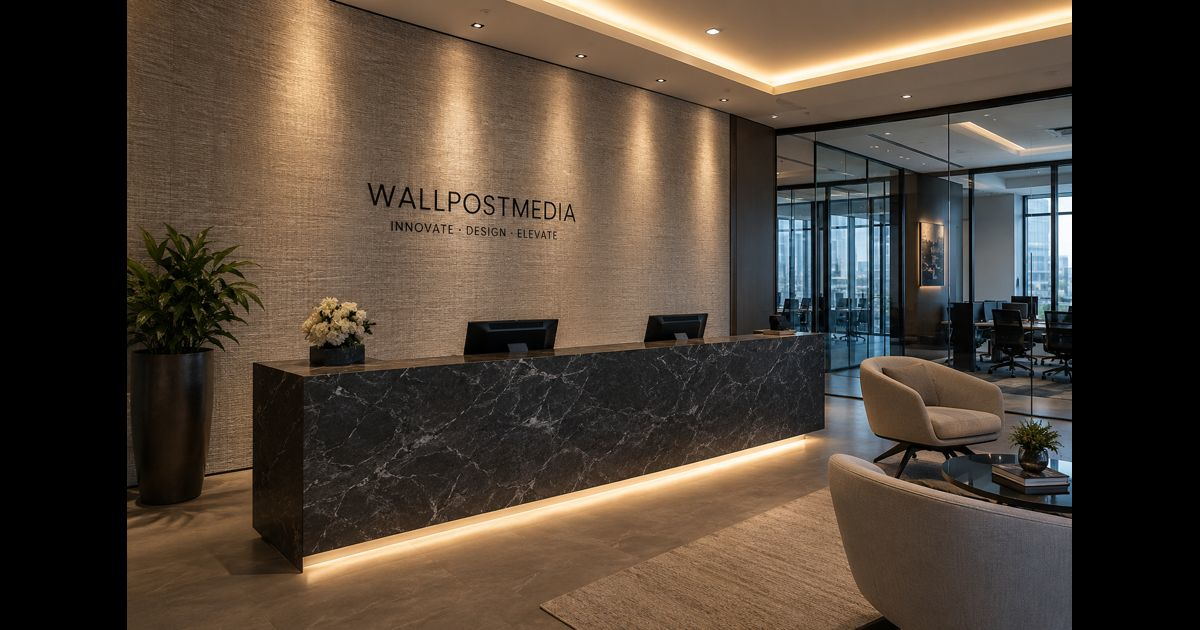
Wallpaper can change how a room is perceived before anyone speaks. In a reception area, it can make a business feel considered and established. In a meeting room, it can support a calm, professional setting. In a small home office, it can add depth without filling the room with more furniture.
Yet wallpaper is not simply a color choice. It is a surface decision with consequences for maintenance, budget, installation, indoor environment, and future changes. A pattern that looks excellent in a small sample can feel overwhelming across a full wall. A finish chosen for visual impact may not withstand cleaning, sunlight, or frequent contact.
A sensible choice begins with the room’s real use. Once that is clear, design, material, and cost decisions become easier to evaluate.
Begin With the Room, Not the Pattern
The same wallpaper can work beautifully in one setting and poorly in another. A quiet executive office, busy corridor, waiting room, retail space, and spare-bedroom workspace place different demands on the wall surface.
Consider four questions before reviewing samples:
- Who uses the room, and how often?
- What should the room communicate: calm, energy, discretion, warmth, or creativity?
- How much daylight and artificial light does it receive?
- Will the walls face repeated touching, cleaning, moisture, or furniture movement?
A reception wall may need a strong but restrained focal point. A boardroom often benefits from texture or a low-contrast pattern that stays composed on video calls and does not distract during discussion. A corridor needs durability first, because scuffs and cleaning can quickly damage a delicate finish.
This is similar to sound business strategy: a choice is stronger when it follows a defined purpose rather than personal preference alone. The same principle applies when organizations set priorities and weigh consequences in business strategy.
Use Light and Scale as Practical Filters
Light changes wallpaper more than most people expect. A warm pattern can appear dull under cool office lighting. A deep color that feels rich in a showroom may make a poorly lit room seem smaller. Before ordering, place a large sample on the intended wall and view it in morning, afternoon, and evening conditions.
Small rooms are usually more forgiving of lighter grounds, fine textures, and low-contrast motifs. These choices add interest while preserving a sense of openness. Large, well-lit rooms can carry stronger color, larger artwork-style murals, or bolder geometric designs because there is enough visual space around them.
Pattern scale matters as much as pattern style. A large motif may look dramatic on a single roll but become visually noisy when repeated across several walls. Fine, busy detail can also create an uncomfortable backdrop for computer work or video meetings.
A useful rule is simple: the closer people sit to the wall and the longer they remain in the room, the more restrained the pattern should be.
Match the Finish to Daily Wear
Wallpaper is available in many materials, and the best option depends on the environment.
|
Room condition |
Suitable direction |
Main reason |
|
Low-contact residential room |
Paper, non-woven, or textured finish |
Visual flexibility and a softer appearance |
|
Home office or meeting room |
Durable non-woven or wipeable finish |
Easier care without a heavily commercial look |
|
Reception, hallway, or retail space |
Commercial-grade vinyl wallcovering |
Better resistance to abrasion and routine cleaning |
|
Humid or splash-prone area |
A finish specifically rated for moisture exposure |
Reduces the chance of lifting, staining, or mildew |
“Washable” is not a universal promise. It may mean a material tolerates a lightly damp cloth, not repeated scrubbing or strong cleaning chemicals. Check the manufacturer’s maintenance instructions and test an inconspicuous area before using any cleaner.
For commercial spaces, request the product specification sheet. It should identify the material, cleaning guidance, installation method, warranty conditions, and applicable performance information. Where building codes apply, fire performance must be confirmed against the project’s local requirements rather than assumed from a product description.
Treat Samples as Evidence, Not Decoration
A wallpaper sample is a starting point, not a final answer. It is too small to show repeat direction, seam visibility, sheen, or how the design responds to a room’s lighting.
Order enough material to create a meaningful test area. Place it beside flooring, upholstery, cabinetry, and paint. View it from the door, at desk height, and from the seating area. If the wall will appear behind people on camera, check it through the actual video platform used by the team.
Also inspect the product in context with the room’s existing visual weight. Dark wood, metal shelving, strong artwork, and patterned carpets can compete with a bold wallcovering. Wallpaper does not need to carry every design decision. Often, its best role is to create a stable background for furniture, lighting, and people.
Decide Whether the Wall Should Blend In or Lead
Wallpaper usually serves one of two roles.
A supporting wallcovering brings texture, warmth, or quiet visual structure without becoming the room’s central feature. Linen-like finishes, subtle plaster effects, tonal botanicals, and gentle geometries often work well in spaces where concentration or client conversation matters.
A feature wallcovering is meant to lead. It may use a mural, large-scale art, a dramatic color field, or a distinctive branded motif. This approach is most effective when the rest of the room is controlled. If every surface competes for attention, the result can feel temporary and difficult to update.
Brand references should be handled carefully. A logo repeated across an entire wall can feel more like advertising than interior design. A restrained use of brand colors, local imagery, or a custom pattern usually ages better and gives the space more flexibility if the visual identity changes.
Include the Full Cost Before Approving the Design
The price of wallpaper is only part of the investment. A realistic budget should include:
- Quantity needed, including pattern matching and cutting allowance
- Wall repair, priming, and moisture treatment
- Adhesive and installation labor
- Removal and disposal when the finish reaches the end of its life
- Downtime or access restrictions during installation
- Replacement material for future repairs
Pattern matching can materially increase waste, especially with large repeats or murals. Corners, windows, doors, and built-in features also increase labor. A lower-priced product can cost more overall if it is difficult to align, requires extensive wall preparation, or will need replacement sooner.
This wider cost view mirrors a core lesson in market analysis: the visible price is only one part of a decision. The operational conditions around it often determine the real value.
Do Not Skip Wall Preparation
Wallpaper performs only as well as the surface beneath it. Walls should be clean, dry, smooth, and stable before installation. Loose paint, old adhesive, cracks, dust, and unaddressed moisture can lead to bubbling, seam separation, staining, or premature failure.
Moisture requires particular care. Wallpaper can conceal a problem temporarily, but it cannot solve water intrusion, condensation, or mold. Resolve the underlying cause before covering the wall.
Professional installation is usually worthwhile for large rooms, high-value materials, murals, demanding pattern repeats, or commercial settings. For a smaller residential project, follow the manufacturer’s instructions precisely and confirm whether the product requires paste-the-wall, paste-the-paper, peel-and-stick, or another method.
Make Flexible Choices in Rented Spaces
A leased office or rented home may need a finish that can be removed with limited surface damage. Removable products can be useful, but performance depends on wall preparation, paint condition, humidity, installation quality, and the length of time the material remains in place.
Before proceeding, review the lease and obtain written approval where required. Keep product details, samples, invoices, and installation records. This protects both the tenant and property owner if questions arise during restoration or handover.
A removable product should still be judged on appearance, durability, and safe installation. “Temporary” does not automatically mean low-risk.
Choose for Longevity, Not the Moment
A wallcovering can remain in place for years. Trends deserve attention, but they should not outweigh the room’s purpose or the organization’s ability to maintain the result.
The most durable choices often have a clear visual idea without relying on novelty: balanced color, appropriate texture, proportionate pattern, and a finish that suits the level of use. A strong wallpaper decision makes the room easier to inhabit and maintain. It does not demand constant attention.
Wallpaper is at its most effective when design and operations agree. The wall should look right on the first day, remain practical after months of use, and continue to make sense when furniture, staffing, or business priorities change.